


Lesson 16 - The Future
Navigation: Home
→ Intermediate Level
→ Lesson 16
→ Reading
Pages in this lesson: Vocabulary - Grammar - Listening - Dialogue - Reading - Spelling - Dictation - Game
This page: Read an article about nanotechnology and answer questions about the article.
Below you will find a list of key vocabulary you need to know to understand the lesson. Click on each word to hear it and practice its pronunciation.
Read the definition and select the word that was defined.
Paragraph #1
The term nanotechnology refers to science and technology in dimensions smaller than 1,000 nanometers. One nanometer is a billionth of a meter. The research in nanotechnology is going in primarily two directions, construction of objects atom by atom and production of nano-sized machines.
Paragraph #2
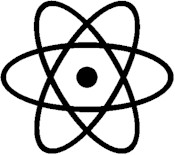
AtomImagine if we could build objects by assembling the atoms. We could build whatever we wanted, from a diamond to a rose. We would simply need to assemble the necessary atoms in the correct way to make anything. If you got hungry, you wouldn't need to cook, you would just order whatever you wanted from a machine and it would assemble the food for you, atom by atom. If you needed new clothes, you wouldn't need to go to the store or even sew, a machine would assemble the atoms into a beautiful new outfit.
Paragraph #3
The other branch of nanotechnology research involves making nano-sized machines for different purposes. These nano-sized robots could go into the body and cure disease. If you got sick you wouldn't have to undergo surgery. You would just drink a solution that contained the little nano-robots and they would do the repair work from the inside, like little mechanics.
Paragraph #4
This research, as many other kinds of research, raises ethical questions. Should we build objects including life forms atom by atom for our purposes? How would you feel about having mechanical parts in your body? What would be the motivation to work if we could have machines produce everything (Would we even want to work)?
Paragraph #5
Nanotechnology raises a lot of interesting questions but it has a lot of potential. If we could use nanotechnology to produce food and objects at will, it would mean the end of hunger and poverty. Perhaps we could even travel long distances instantly by disassembling our atoms in one place and reassembling them in our destination. The sky is the limit to what we could do with nanotechnology!
In which paragraph are the following questions answered?
Write your answer to one of the ethical questions in the second-to-last paragraph.
Write in the comments section below. Passport to English is a community of people who want to learn English for free. Please be supportive of each other. If you see a mistake in someone's writing, please respond with the correction. Remember that comments other than those written by Janet Castrejon (the author of this website) do not represent Passport to English. If someone posts inappropriate comments on this page, please send a message to mail@passporttoenglish.com and include the page where you saw the comment.

Frequently Misspelled Words in English
Intermediate English -
Lesson 16 - The Future
Vocabulary - Grammar - Listening - Dialogue - Reading - Spelling - Dictation - Game
Do you prefer to learn English with short video lessons? Follow us on our "The English Minute" YouTube Channel.
Beginning - Intermediate - Advanced - Teachers
Pronouns - Pronunciation Rules - Verbs - Irregular Verbs
Vocabulary - Grammar - Pronunciation - Spelling