


Lesson 15 - Weather
Navigation: Home
→ Advanced Level
→ Lesson 15
→ Reading
Pages in this lesson: Vocabulary - Grammar - Listening - Dialogue - Reading - Expressions - Dictation - Game
This page: Read an article on how to prepare for extreme weather conditions.
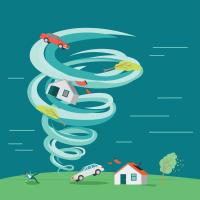
Below you will find a list of key vocabulary you need to know to understand the lesson. Click on each word to hear it and practice its pronunciation.
Read the definition and select the word that was defined.
The best way to minimize the effects of extreme weather is to be prepared for it. There are certain steps that you can take to prepare for any disaster such as preparing an emergency kit with first aid supplies, food, and water. Other steps are unique to each sort of disaster. The United States government has a website, ready.gov, with advice on how to prepare for many different sorts of disasters. Here is a summary of some of their recommendations.
The best way to prepare for a drought is to make your home more water-efficient. Conserve water by repairing dripping faucets and other leaks. When you buy new appliances, choose high-efficiency ones, such as appliances bearing the Energy Star label. Plant native or drought-tolerant plants in your yard, which require little or no irrigation. If you install an irrigation system in your yard, be sure it's a water-efficient one such as micro and drip irrigation.
Prepare for a hurricane by doing some research ahead of time and securing your home. First, research to find out if your home is in a flood zone or an area with a low elevation which may be flooded. Find out where you would go if you had to evacuate your home and plan a route to get there. Secure your home by covering all your windows. Install storm shutters or board up the windows when a hurricane is approaching. Install straps or additional clips on the roof to securely fasten it to the frame structure of your home. Clear out your house's rain gutters and downspouts so water can drain. Reinforce your garage doors so that they don't blow off. Bring in all items that may blow away before the hurricane arrives such as outdoor furniture, decorations, and garbage cans.
Thunderstorms carry risk from high winds, rain, as well as lightning. Remove dead or rotting trees and loose branches that could fall in high winds. Bring inside or secure outdoor objects that could blow away. Unplug electronic equipment that may be damaged if lightning hits the electrical lines. Finally, go indoors and wait until the storm passes.
The best way to avoid risk of flood is to avoid building your house in a flood zone. If you are in an area that is prone to flooding, elevate the furnace, water heater and electric panel and, if possible, construct barriers to stop water from coming in to your home. As with a hurricane, you'll need to research where you would go if you had to evacuate your home in a flood and plan how to get there.
If you live in an area that experiences cold temperatures and snow, you'll have to make other preparations. Stock up on rock salt or other products to melt ice on walkways as well as sand to improve traction when your car is slipping out of your driveway. Be sure you have snow shovels and other snow removal equipment. Keep a smaller shovel in your car to dig your car out if it gets buried in snow or slips off the road and into a snow drift. Make sure you have sufficient heating fuel in your home just in case the electricity goes out. Keep dry wood for your fireplace or wood-burning stove so that you can keep warm without electricity if necessary. Make sure you have warm clothing and blankets in your home. It's even a good idea to keep a blanket in your car, for emergencies. Minimize travel in extreme weather. It's safer to stay at home with nice cup of hot chocolate!
Instructions
For each preparation below, select the weather condition.
Have you prepared your home for extreme weather conditions? How? If you haven't, what do you think you should do to prepare your home?
Write in the comments section below. Passport to English is a community of people who want to learn English for free. Please be supportive of each other. If you see a mistake in someone's writing, please respond with the correction. Remember that comments other than those written by Janet Castrejon (the author of this website) do not represent Passport to English. If someone posts inappropriate comments on this page, please send a message to mail@passporttoenglish.com and include the page where you saw the comment.
Advanced English -
Lesson 15 - Weather
Vocabulary - Grammar - Listening - Dialogue - Reading - Expressions - Dictation - Game
Do you prefer to learn English with short video lessons? Follow us on our "The English Minute" YouTube Channel.
Beginning - Intermediate - Advanced - Teachers
Pronouns - Pronunciation Rules - Verbs - Irregular Verbs
Vocabulary - Grammar - Pronunciation - Spelling