


Lesson 6 - House
Navigation: Home
→ Beginning Level
→ Lesson 6
→ Grammar
Pages in this lesson: Vocabulary - Grammar - Listening - Dialogue - Reading - Pronunciation - Dictation - Game
This page: There is/There are
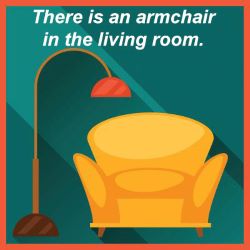
In English, "There is" and "There are" are used to describe the existance of things (singular and plural).
"There is" is used to describe the existance of a singular object:
There is a book.
"There are" is used to describe the existance of a plural objects:
There are books.
Note:
To form the negative, simply add the word "not" or its contraction.
examples:
To ask a question, we simply reverse the order of the words.
examples:
Is there a book?
Yes, there is. (Affirmative answer)
No, there isn't. (Negative answer)
Are there books?
Yes, there are. (Affirmative answer)
No, there aren't. (Negative answer)
Watch a video from "The English Minute" that teaches how to use "There is" and "There are." Follow our "The English Minute" YouTube Channel and learn English in just a few minutes with our short video lessons.
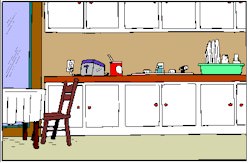
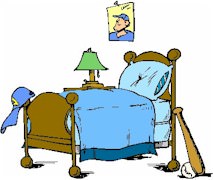
Select the correct answers to describe the rooms.
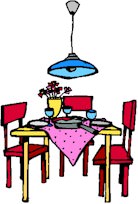
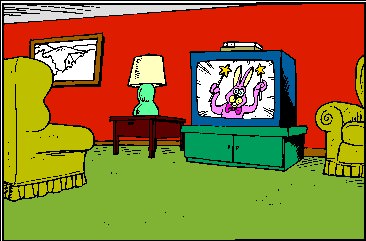
Write sentences using There is or There are, or their negative forms, to describe what is and is not in each room. Write the affirmative sentences without contractions and the negative sentences with contractions, as in the example below. Make sure you use correct capitalization and include a period at the end.
Example
table
TV
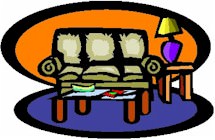
Instructions example |
Write a paragraph describing your house. What is in the house? Make sentences with "There is..." and "There are..." to describe what is in the house.
Write in the comments section below. Passport to English is a community of people who want to learn English for free. Please be supportive of each other. If you see a mistake in someone's writing, please respond with the correction. Remember that comments other than those written by Janet Castrejon (the author of this website) do not represent Passport to English. If someone posts inappropriate comments on this page, please send a message to mail@passporttoenglish.com and include the page where you saw the comment.
Beginning English -
Lesson 6 - House
Vocabulary - Grammar - Listening - Dialogue - Reading - Pronunciation - Dictation - Game
Do you prefer to learn English with short video lessons? Follow us on our "The English Minute" YouTube Channel.
Beginning - Intermediate - Advanced - Teachers
Pronouns - Pronunciation Rules - Verbs - Irregular Verbs
Vocabulary - Grammar - Pronunciation - Spelling