


Lesson 5 - Family
Navigation: Home
→ Advanced Level
→ Lesson 5
→ Grammar
Pages in this lesson: Vocabulary - Grammar - Listening - Dialogue - Reading - Expressions - Dictation - Game
This page: Aprende como usar el verb had to. Aprende la diferencia entre have con el significado de tener vs. have con el significado de haber.

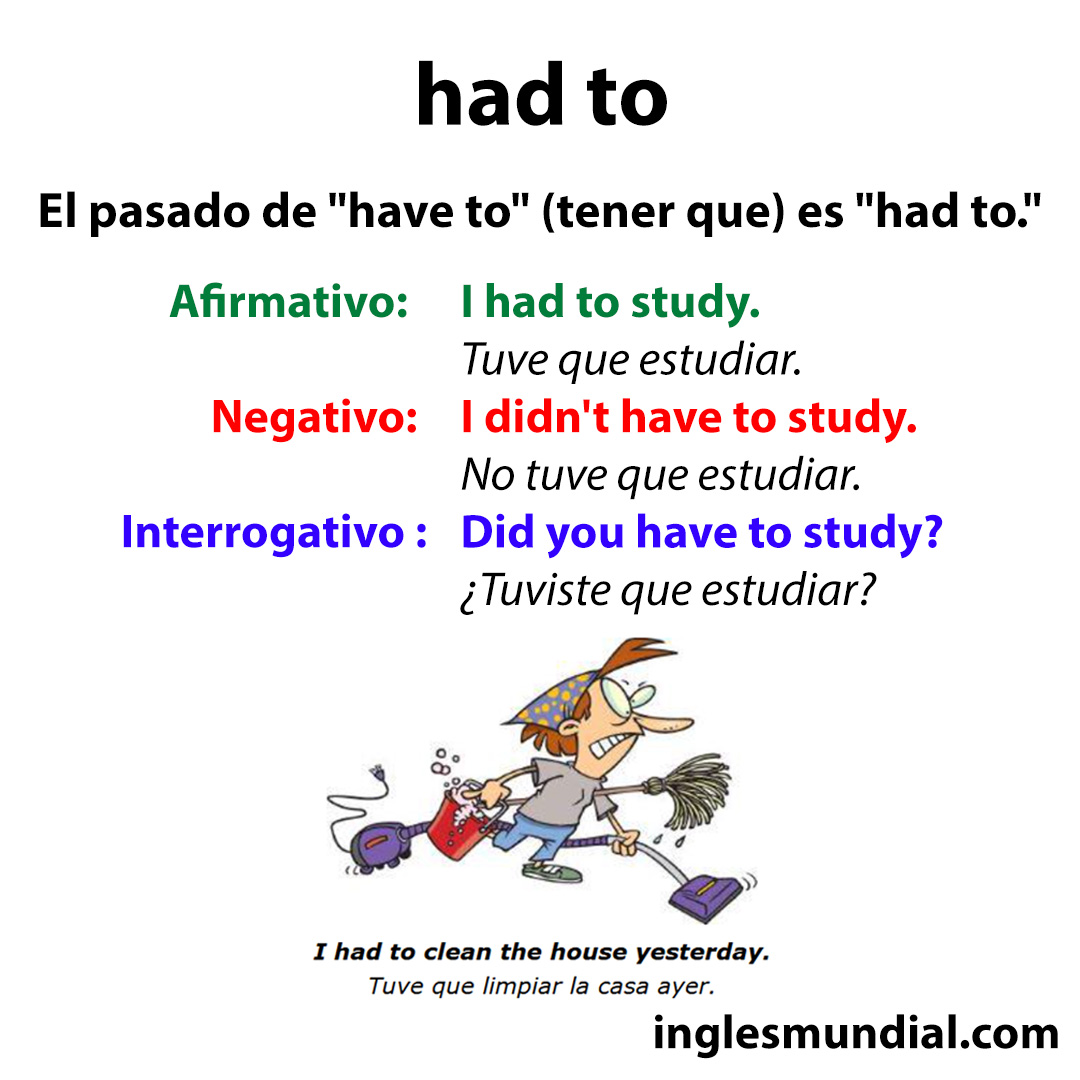
I had to clean the house yesterday.
Tuve que limpiar la casa ayer.
El pasado de "have to" (tener que) es "had to."
Instructions
Sigue una lista de reglas que Rachel tenía que obedecer cuando era una niña. Haz oraciones con "had to" para describir lo que Rachel tenía que hacer. Asegúrate de que escribiste correctamente las letras en mayúsculas o minúsculas como corresponde y que escribiste el punto al final.
Family Rules 1. Do your homework right when you get home from school. |
exercise
Rule #1
She had to do her homework right when she got home from school.
Instructions
Ivan, el esposo de Rachel, no tenía que obedecer estas reglas en su casa. Haz oraciones con "didn't have to" con la información de la lista de reglas.
Rachel's Family Rules 1. Do your homework right when you get home from school. |
exercise
Rule #1
He didn't have to do his homework right when he got home from school.
Share this image on your social media
or link to it from your website.
https://www.passporttoenglish.com/images25/infographics/had-to.jpg
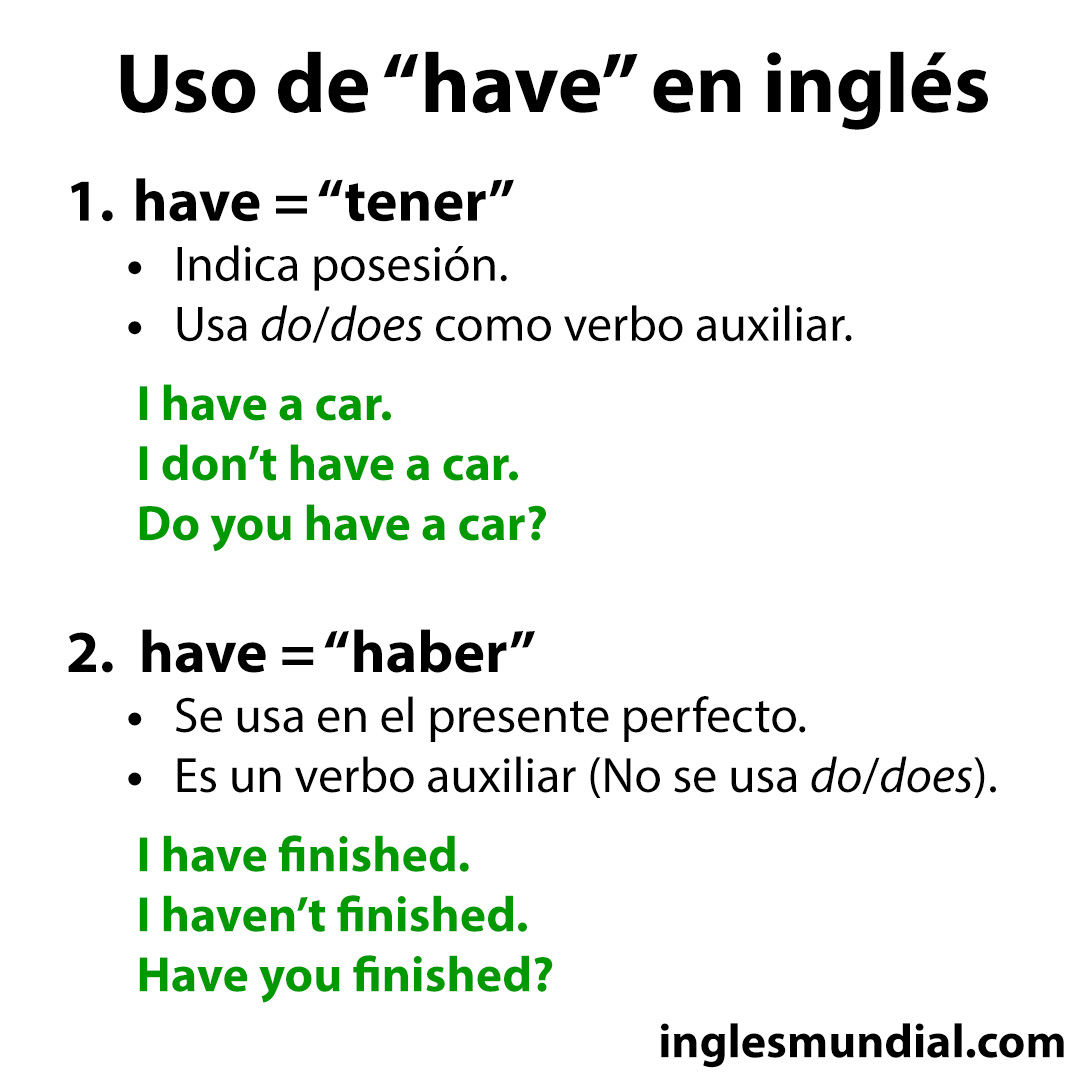
La palabra "have" en inglés puede significar "tener" o "haber" en español, depende del contexto.
Cuando "have" tiene el significado de "tener," se conjuga como un verb regular en el inglés americano. Requiere un auxiliary verb (do/does) en el negativo e interrogativo.
Cuando "have" tiene el significado de "haber" (el presente perfecto), la palabra "have" es el auxiliary verb.
Selecciona el significado correcto de have en cada oración.
Cambia las oraciones a negativo. Recuerda que cuando have significa tener (para indicar posesión) tienes que usar don't o doesn't. Cuando have significa haber (presente perfecto) puedes añadir not a la oración (o usar las contracciones haven't o hasn't). En este Exercise, usa la contracción para el negativo.
examples
He has a car.
He has driven the car.
Cambia las oraciones a preguntas. Recuerda que cuando have significa tener (posesión), tienes que usar Do o Does. Cuando have significa haber (presente perfecto), cambias el orden (antepones have o has al subject de la oración).
examples
He has a car.
He has driven the car.
Hay otra diferencia entre have con el significado de tener y have con el significado de haber. Cuando have significa tener, no debes hacer una contracción, pero cuando significa haber, puedes hacer una contracción.
Haz una contracción del verb si es debido. Si no es debido hacerlo, deja el espacio en blanco. Cuando termines con todos, haz clic en el botón de REVISAR al final.
examples
I have visited her house.
I have a house.
(Lo deje en blanco porque no se puede hacer una contracción.)
Share this image on your social media
or link to it from your website.
https://www.passporttoenglish.com/images25/infographics/have-tener-haber.jpg
Instructions example |
Escribe una oración con had to, una oración con have con el signficado de tener, y una oración con have con el signficado de haber.
Write in the comments section below. Passport to English is a community of people who want to learn English for free. Please be supportive of each other. If you see a mistake in someone's writing, please respond with the correction. Remember that comments other than those written by Janet Castrejon (the author of this website) do not represent Passport to English. If someone posts inappropriate comments on this page, please send a message to mail@passporttoenglish.com and include the page where you saw the comment.
Advanced English -
Lesson 5 - Family
Vocabulary - Grammar - Listening - Dialogue - Reading - Expressions - Dictation - Game
Do you prefer to learn English with short video lessons? Follow us on our "The English Minute" YouTube Channel.
Beginning - Intermediate - Advanced - Teachers
Pronouns - Pronunciation Rules - Verbs - Irregular Verbs
Vocabulary - Grammar - Pronunciation - Spelling